
Weak website design is detrimental to a company’s online exposure and can sometimes even break it. The initial impression really matters, and forgetting about website design can lead to the loss of potential clients. Bad design in websites usually means bad interactions, slowness, indecisive users, and interactions that net negatively for their users. This in turn affects the conversion rate, trustworthiness, and the rank of the website on search engines. The first step one must take towards making improvements is to identify the factors that contribute to a bad website. Let us break down what bad website design is and points where one can get bad website design and how to prevent them.
Key Characteristics of Bad Website Design
In order to attribute the site to the body of poor designed ones, there are a clear set of criteria. Most of the time these include the central issue of website usability that is concerned about visitors of the site, its appearance and other processes that can be found within the site. These understanding is important in case you want to correct that or avoid if its not the case.
How bad site design can damage your business
Even though websites have two sides for usage. That of the customers and the owners. A website with bad design does not only irate customers. It injures the business as well. For instance, if users visit your site and find it hard to navigate. Or the layout is boring. They will probably judge your business to be unprofessional or out of touch with modern-day realities. Research has suggested that 88% of online shoppers would spend their time and energy searching for alternative sites. Rather than experimenting with that site once again after an unhappy experience.
The role of poor UI design in bad looking websites
Poor UI design (User Interface) is an everyday story that is one of the reasons as to why websites look bad. When buttons are misplaced or hard to locate, menus are not well designed or navigation is tiring, users get annoyed. This results to a rise in the bounce rates and a fall in the engagement.
Common Examples of Bad Web Pages
Some bad websites are straight forward while others have more complex problems of bad design. Here are a few bad design experience examples that provide insights of the type of the design to shun.
Real-life bad user experience examples
- Confusion due to lack of geographical continuity: Sweet websites without any sequence and order confuse visitors about what they suppose to find.
- Too many advertisement: Websites with excessive advertisement or uses of pop up advertisements make users run away.
- Non-adaptive sites: The inability of website to scale to the size of mobile devices leads to frustration for users since they cannot engage with the content properly.
These instances demonstrate always concentrating on the designing that basics satisfies the audience rather than wasting on the centrals.
Signs Your Website Suffers from Poor Web Design
if you’re wondering whether or not a redesign of your website is really necessary, here are a few things to look out for.
Why a bad looking website drives users away
A bad looking website is often one of the first signs of something’s wrong. It has been noticed that websites that have a lot going on in their layout, use several fonts or have old graphics, alert site visitors that your company could be indifferent about its online image. This stops users ever before they get the chance to interact with your content.
Lack of mobile responsiveness: A major design flaw
Perhaps the greatest blunder of the many that contribute to the creation of a bad website design. It is not considering the mobile version. Given that more than half of all web traffic originates from mobile devices. A website that can’t change according to the different screen sizes will be losing quite a huge portion of its audience. Poor mobile responsiveness is one of the most guaranteed ways of driving a user away and making them look elsewhere.
How Bad Website Design Affects Your Business
A website is not just an online picture of your business, but its functional tools to accelerate the volume of sales and increase the credibility if used properly. Bad website design can be quite expensive for your business.
For example, if a visitor has a negative experience on a site, the chances of converting them into a customer are very low. Site performance, including page load speed and layout factors, directly impacts brand image, either enhancing it or damaging it.
Poor UI Design: The Hidden Cost of Bad Website Design
It is essential to understand why, when it comes to such factors as UI design, it is important not only to focus on mere beauty. It also determines the way users will behave on your site.
How poor UI design leads to bad user experience
In addition to their visual effects, poor UI design makes it difficult to use a site. This is because a user is unable to locate the site they wish to explore. Nonsensical fonts, ill-positioned buttons, and long awkward forms all skew the overall experience to be wanting. To make matters worse, a weak user experience results in an increase in bounce rates, decrease in the amount of traffic and interaction, and ultimately reduction in sales amounts.

Fixing Bad Website Design: A Step-by-Step Guide
If these problems sound familiar then your website probably has some badly designed areas that need some design work.
- Re-organize the menus: Make it possible only for users to get lost because they have so many things they wish to do, rather than due to geographic disorientation. Your menus should be straightforward as well as effective, while your calls to action should be loud and clear.
- Ensure your site works well with all devices: Have your site created with responsive design so that it fits various screen sizes.
- Reduce downtime: Use image file formats that will make the image size small and make sure that your layout and other designs are not complicated because slow sites are a wastage of time.
- Make it look nice: A website that is visually pleasing requires the use of unique and professional design structures with regular fonts and colors.
- Focus on usability: Make sure to test your website with actual users and make changes according to their requirements.
If you’re looking to overhaul your website or prevent bad design mistakes, consider hiring a professional. For affordable options, you can visit Fiverr Marketplace, where skilled designers can help turn your site around.
Best Practices for Avoiding Bad Website Design
How to avoid web design that you would regret later is by observing these best practices.
- Do not have several moving parts: Having too many features on your site can drive away possible visitors due to imitation.
- Unity in design: Use the same colors, fonts, and general look and feel of every aspect on all the pages.
- Conduct the usability test: Continue evaluating how your site performs and how users use it on various devices and across several browsers.
The Impact of Bad Website Design on SEO
Not only bad website design daunts the potential customers but also ruins the ranking of the websites in search engines. It is indubitable that Google prefers sites that enhance the user experience with such good designs. The rank of the website will face several consequences as a result of poor design.
How bad design can negatively affect search rankings
- Sites that take longer to load: Page speed is one of the components present in Google’s algorithm and sites that take too long to load are ranked low in search results.
- Not easy to view on mobile: such websites eventually get suffered by the search engines because they fall into the cancer of penalty on pages.
- Very high bounce rates: When people visit your pages and leave immediately, search engines infer that the content is not useful or relevant and can affect the page rank negatively.
Examples of Bad Web Pages vs. Good Website Design
In order to comprehend the vast disparity that exists between bad website design and good design, here’s a comparison:
| Aspect | Bad Website Design | Good Website Design |
| Navigation | Confusing, hard to find pages | Clear, easy-to-use menus |
| Loading Speed | Slow, frustrating delays | Fast, optimized for quick loading |
| Mobile Optimization | Unresponsive on mobile devices | Responsive, adapts to all screens |
| Visual Appeal | Outdated, cluttered layout | Clean, modern, and consistent |
Bad Website Design Statistics and Trends
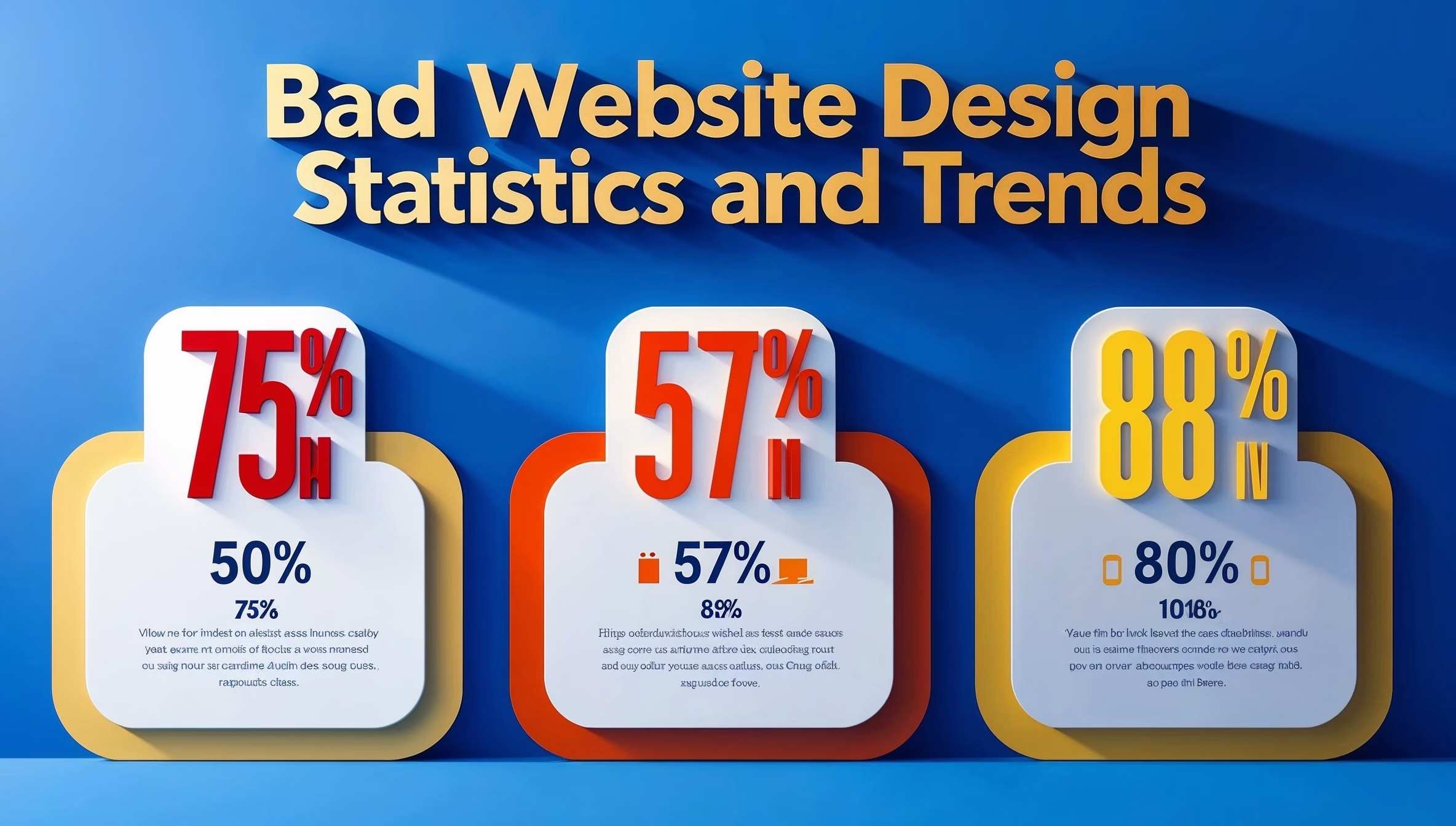
One glance at the statistics will show how good design is so important:
- 75% of consumers based on a website design will judge the credibility of the company.
- 57% of internet users concluded that they would not use the services of a poorly designed website for mobile users and wouldn’t recommend their usage.
- 88% of users are less likely to return to the site after a poorly done encounter.
If you’re looking to overhaul your website or prevent bad design mistakes, consider hiring a professional. For affordable options, you can visit Fiverr Marketplace, where skilled designers can help turn your site around.
Conclusion: Fixing and Avoiding Bad Website Design
To summarize, inappropriate website design is a critical risk for your business because it discourages potential customers from making purchases, it diminishes trust in your brand, and it may lead to detrimental effects on SEO. The risks of neglecting to keep web design standards are evident. This results in poor UI design and badly designed websites. Fixing these problems in your site will allow users to enjoy using it. They will interact more. In the end, this makes you scale your sales. Strip the disadvantages of a bad website design by embracing responsiveness, usability and simplicity.
Frequently Asked Questions (FAQ)
Examples of poorly designed websites include those with long loading times, confusing layout, and difficulty adjusting to mobile gadgets.
When UI is done poorly, the user experience tends to be underwhelming. A potential visitor of a website may have some difficulties in using the features on the website.
Yes. Poor quality websites make businesses look risky and untrustworthy and this prevents the customers from buying.
Bad website design impacts SEO by increasing the time it takes to load the web pages, encouraging more visitors to leave the pages quickly, and making the website less usable on mobile devices, which lowers search position.
Fiverr offers a platform where you can hire affordable and professional web designers to fix issues with poor website design.
