
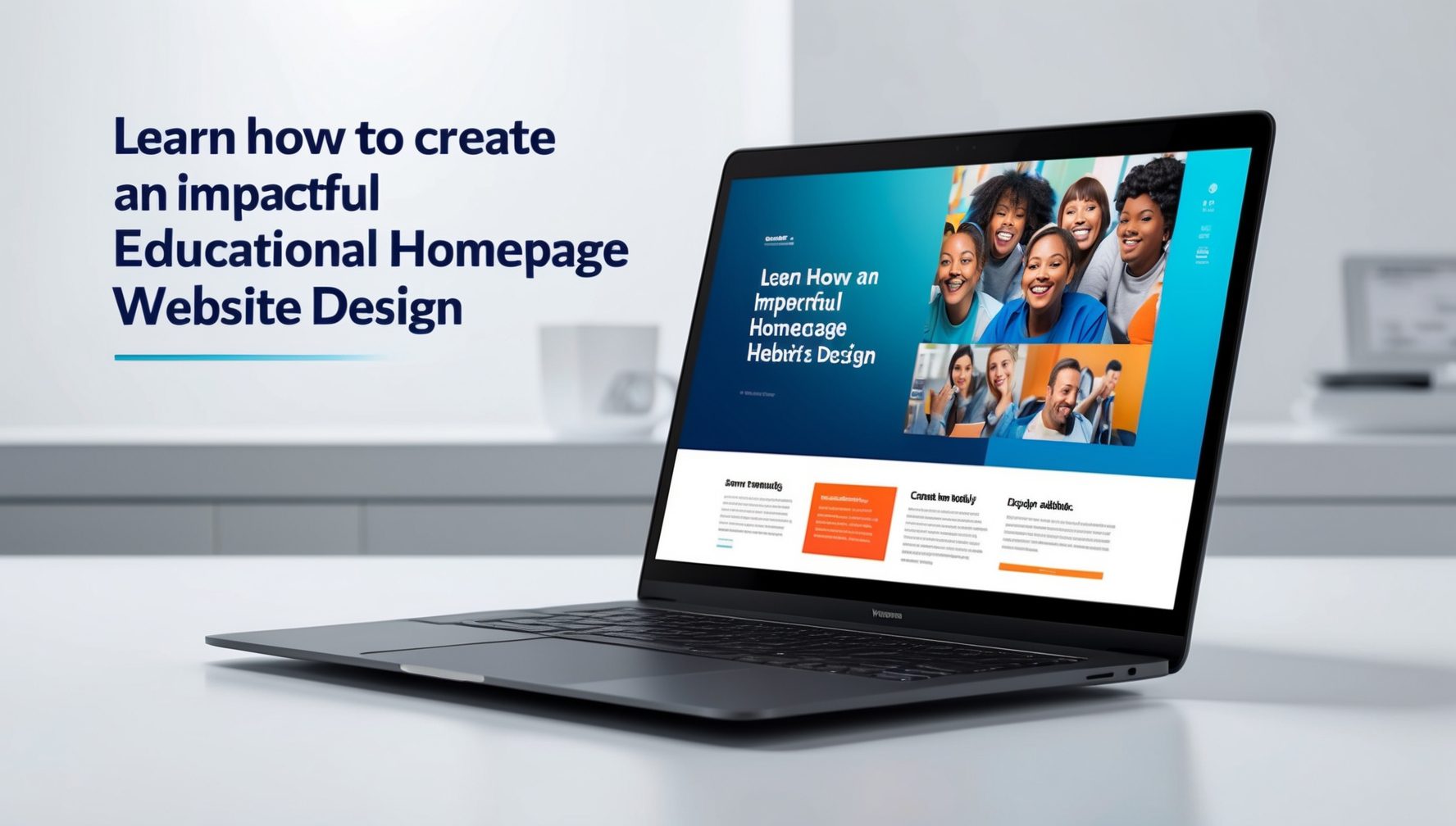
Are your students or visitors bored with the educational homepage and you are not quite sure why? The educational homepage website design could not be any more effective; one only needs to see how big of a difference a proper organization with creative elements can have. Nowadays, especially more so than ever with the rampant growth of the internet, a homepage is frequently the very first element that users notice. Let us go right on how you can work on the layout of your homepage not to just wow visitors but keep them on the website.
Key Elements of a Successful Educational Homepage
The effectiveness of your educational homepage is determined by its overall design and structure. A common problem in people’s interaction is the information overload. Thus, keep in mind effective design, which is clean and not cluttered with the content that is not of primary importance.
A well underlined and orderly structure of education website design is another important aspect. You do not want to have users search through too many sub links in order to get the information they want. Another important element is the presence of space. By avoiding unnecessary clutter, you help them concentrate on key information.
Designing for Higher Engagement in Education Websites
In order to design for interaction, content and the proper imaging needs to be employed. The design of a higher education website design has to require that attractive images and videos style couplers are accompanied by interesting and uncomplicated to read text. But visuals alone will not be enough; the organization of those visuals will matter significantly too. For any webpage, it is pertinent to have a certain flow that directs the viewer from one part of the page to another.
Moreover, engaging devices such as quizzes or animations might help capture focus, especially of younger users. Preparing mobile versions of educational homepage websites is not a mere wish, but rather a must as the number of mobile browsers continues to rise.
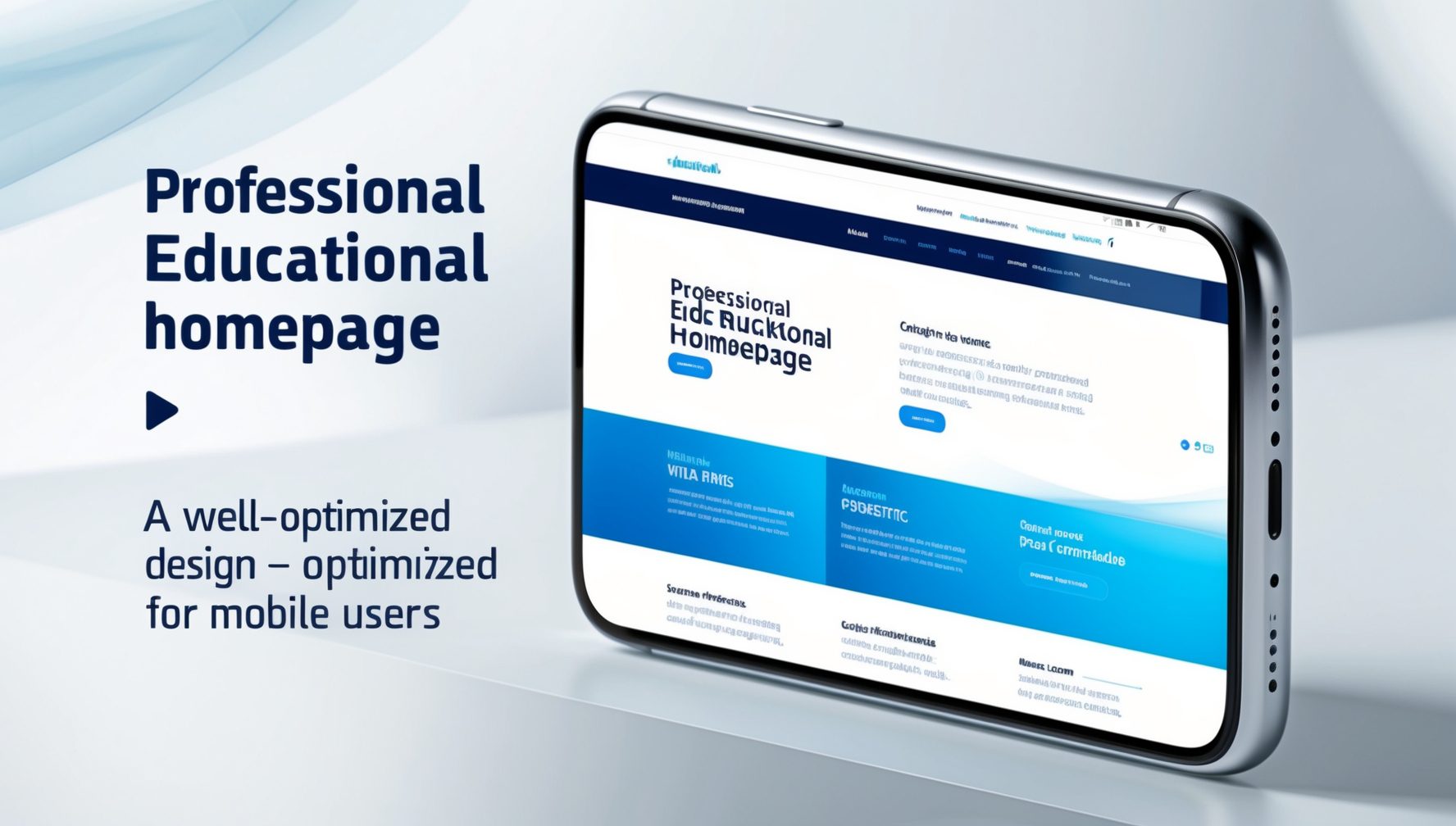
Optimizing Your Educational Homepage for Mobile Users
With the growing use of mobile browsers, it has stopped being a ‘good to have’ and turned into the ‘must have’ requirement for the educational homepage website design. Being able to reach the platform using a smartphone or tablet, students should be able to navigate it as if they were on a desktop. Make sure your educational homepage is mobile responsive – it should be fast loading and easy to navigate across all screen sizes.
A piece of practical advice: it is advisable to design the font sizes and buttons of the site to an appropriate size in relation to touch navigation and avoid building cluttered pages which will be difficult for the users to operate in the site.
If you need a professionally designed educational website to boost engagement and user satisfaction, visit Fiverr Marketplace to hire top-rated designers!
The Role of Accessibility in Educational Homepage Website Design
Every aspect of education should be open to all as much as possible. Constructing an educational homepage that is accessible makes certain that you reach as many users as possible, inclusive of the physically challenged users. Which means making sure that your site also meets the requirements for standards on accessibility by use of alt tags on the images, color contrast, and webpages that can be browsed with the keyboard only.
But with accessibility featuresed, like the ability to scroll by pressing down the arrow or switching to captions or opening a transcript can greatly help those who cannot see or hear thus making the entire website usable.
How to Improve User Experience on Education Websites
User experience (UX) is central in the educational homepage website design, which is also a good practice. To improve or enhance user experience, consider making the layout of the sites simple, friendly and usable. Efficiency is closely linked to usability and this has been effectively translated to structural efficiency in terms of navigability. Users should always be two or maximum three clicks away from content that is either vital or may be considered important.
People visiting the website can also be able to send queries, an invisible request, such as by adding a student inquiry chat option or making a simple and fast search for FAQ available, which is another way to make web interface care for users wholesome and scope for subconscious involvement as well as active support from the designers promoting the website.
Best Practices for Higher Education Website Design Evaluation
Understanding and assessing higher education website design is not only important to satisfy the needs of the users but also that of the institution. You should regularly conduct usability tests, obtain users’ opinions, and perform macro analyses such as measuring the bounce rate and time spent on the page periodically.
Carrying out an evaluation of the higher education website design helps you test and detect areas that need improvement for the design to stay up to date and relevant and to ensure that the users experience zero difficulties as they navigate through.

Science Websites for Middle School: Designing for Students
In designing science websites for middle school students, the goal is to make educational content enjoyable and interactive. Children around this age are more inclined towards images and therefore using animated pictures, videos and quizzes would hold their attention for a longer period.
To keep the audience interested, break down the content into simpler concepts and present the message effectively. This creates an educational environment that aims at exploration and inquisitiveness especially for the smaller pupils.
Implementing Clear Call-to-Actions on Educational Homepages
No educational homepage is designed to leave users passive; it aims to engage them in actionable ways. Visitors to a site need guidance to help them meeting vision objectives through specific actions such as enrolling for classes, obtaining learning materials, or using site support. CTAs should command attention by the use of statutory but pleasing colors and action driven phrasing.
For instance, instead of sticking with the common “Submit” button, change it into “Join Now” or “Get Your Free Guide” to enhance click through rates. Once again, it is all a matter of persuading the users to interact with your content or service features.
Integrating Multimedia for Higher Engagement
Including elements of pictures, videos, and even podcasts can be very helpful in increasing the level of engagement on educational websites. The other benefit of multimedia content is that it helps to break large chunks of text and provides a more interesting method of information consumption.
A good example of multimedia content would be videos about the courses explaining key facets of the course as well as student video testimonials that serve as a marketing tool. Ensure proper optimization of all multimedia content so it loads quickly, preventing any form of user abandonment.
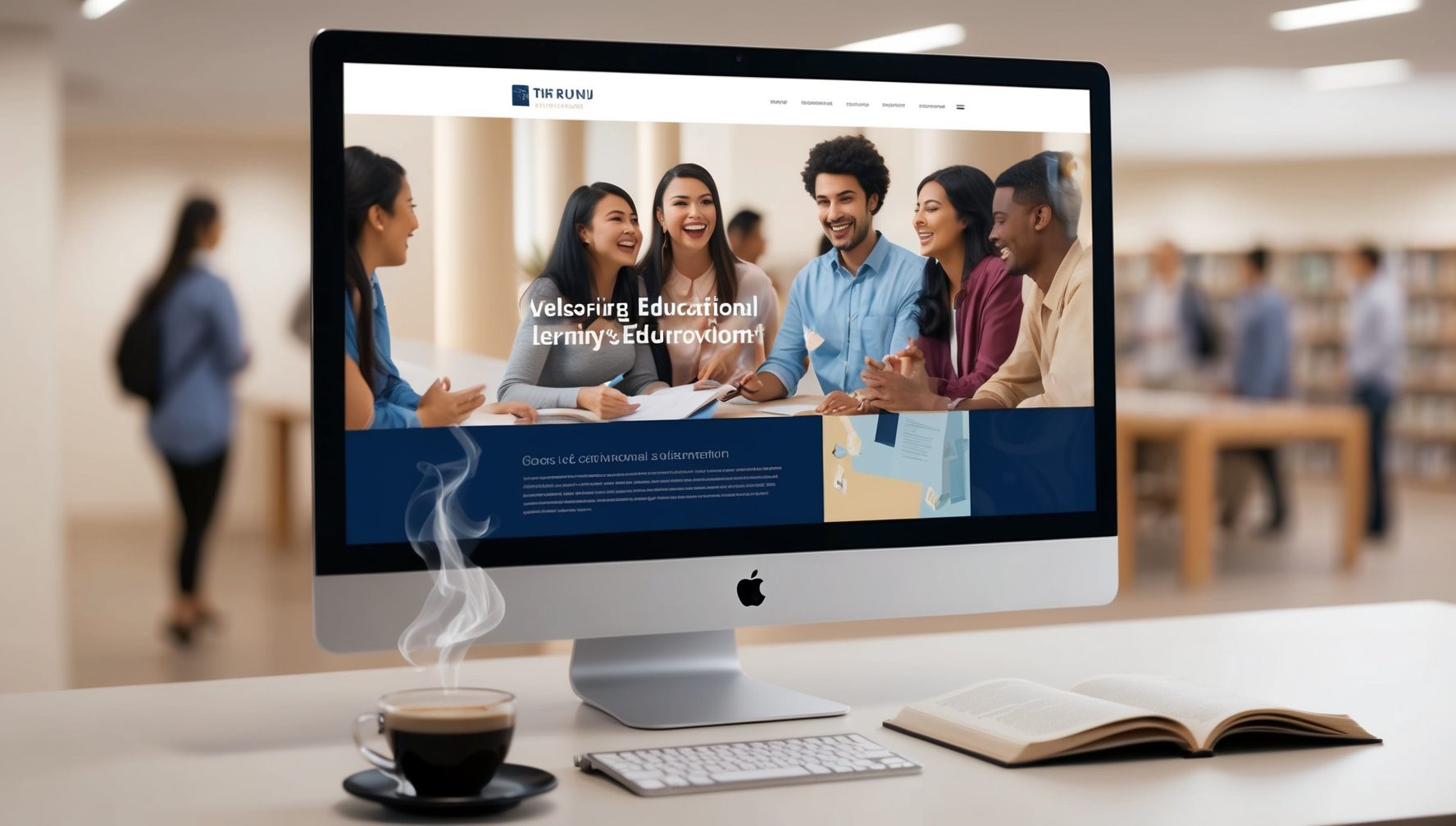
Building Trust Through Educational Website Design
Trust is essential for any institution that deals with education; thus, your educational homepage website design should be professional and competent. You can achieve this by posting clear and relevant contact information, providing testimonials or reviews, and making privacy policy statements easily accessible.
A design that promotes transparency and credibility will go a long way in earning the trust of users making it less likely for them to leave the site without exploring its various features.
If you need a professionally designed educational website to boost engagement and user satisfaction, visit Fiverr Marketplace to hire top-rated designers!
Conclusion: The Future of Educational Homepage Website Design
The way forward for educational homepage website design is personalization or interactive features and opening up more online opportunities to users. The increase in the number of institutions going online means that there is increasing competition, and therefore there is a need to fulcrum on user-centered design more. There is a need to keep up with developments in artificial intelligence, advancing the design approach to mobile first, and also embracing accessibility as this will help in making any educational homepage unique.
Frequently Asked Questions (FAQs)
It is advisable to apply Simplicity, Navigation, Responsiveness, Content to educational homepage website design.
Use of graphics, videos, and quizzes/articles more often can help increase engagement.
Mobile Optimized education Website is addressable to mobile users who are a broad demographic of the general visitors.
You should conduct extensive user testing and monitor data analytics to evaluate and improve websites.
Accessibility contributes to the usability of your website to all, including disabled persons, therefore improving dedication and focus.
